
Welcome to the MAGNO Newsletter – First Half of 2026
The first half of 2026 has been a productive and exciting period for the MAGNO project. Over the past months, consortium partners have gathered for key project meetings, participated in international conferences, organised specialised workshops, contributed to scientific publications, and strengthened MAGNO’s presence in broader conversations on circularity, sustainability and food packaging innovation.
From scientific research on microplastics and ecosystem impacts to new developments around the MAGNO Ecosystem Digital Twin, the project has continued advancing its mission to support more sustainable and circular food packaging systems across Europe.
Here is a snapshot of what we have been working on.
PROJECT PRESENCE AT INTERNATIONAL EVENTS
During the first half of 2026, MAGNO partners participated in a range of international events, conferences and scientific meetings. These activities provided valuable opportunities to share project developments, connect with experts from different sectors and contribute to ongoing discussions around circular economy, sustainability, plastics and environmental protection.
MAGNO Consortium & Review Meeting – Vimercate
One of the most important milestones of the semester was the MAGNO Consortium and Review Meeting, hosted by DNV in Vimercate, Italy.
The meeting brought together partners from across the consortium to review progress achieved throughout the project, discuss challenges and define priorities for the next implementation phase. Updates were shared across all Work Packages, covering scientific developments, stakeholder engagement activities, communication efforts and pilot-related work.
The Review Meeting also provided an opportunity to present results, receive feedback and ensure alignment with project objectives. Beyond formal discussions, the gathering reinforced the value of face-to-face collaboration, allowing partners to strengthen coordination and continue building a shared vision for more sustainable food packaging systems.

Polymers 2026 – Lisbon
From 8 to 10 April 2026, MAGNO followed developments presented at Polymers 2026: From Sustainability to Smart Systems, an international conference held in Lisbon.
The event brought together researchers, industry representatives and innovation actors working on sustainable polymers, circular materials, smart systems and AI-driven solutions. Discussions highlighted the growing importance of interdisciplinary collaboration to support the development of more sustainable materials and packaging systems.
Particularly relevant for MAGNO was the focus on bio-based polymers and circular value chains, topics closely connected to the project’s efforts to improve sustainability throughout the food packaging lifecycle.
ECESP Annual Conference 2026
MAGNO was represented at the ECESP Annual Conference 2026 by Dr Alejandra Pita Milleiro (IDENER), who participated in one of Europe’s leading events dedicated to the circular economy.
Held at a crucial moment for European circular economy policy, the conference explored the upcoming Circular Economy Act and its role in supporting the scale-up of circular products and services across the European Single Market.
The event provided an important opportunity to connect policy discussions with research and innovation initiatives, reinforcing MAGNO’s commitment to supporting the transition towards more sustainable and circular packaging systems.
ECOBIM Annual Meeting – Le Havre
From 11 to 13 May 2026, MAGNO partner Mohamed Banni attended the 21st annual meeting of the ECOBIM network in Le Havre, Normandy.
The event brought together researchers and experts working on aquatic ecotoxicology, environmental stress and pollution impacts in industrial and coastal ecosystems. Among the topics discussed, a dedicated section focused on microplastics, reflecting growing scientific attention towards their environmental effects.
Participation in ECOBIM allowed MAGNO to engage with broader scientific discussions on plastics, ecosystem health and environmental sustainability while strengthening links with the international research community.

MAGNO WORKSHOPS
Workshop on Plastic Packaging Waste Ecosystem Impact Assessment
On 22 January 2026, MAGNO organised a workshop on Plastic Packaging Waste Ecosystem Impact Assessment at the Institut National des Sciences et Technologies de la Mer (INSTM) in Salammbô.
The event brought together researchers, policy experts and practitioners to discuss the impacts of plastic packaging waste on marine ecosystems and human health. Through presentations and moderated discussions, participants explored approaches for assessing environmental impacts and identifying pathways towards more effective pollution prevention strategies.
The workshop reinforced the importance of combining scientific knowledge, policy perspectives and practical experience to address the challenges posed by plastic pollution.
Workshop on the Ecosystem Digital Twin
On 18 June 2026, MAGNO hosted an online workshop dedicated to one of the project’s most innovative developments: the Ecosystem Digital Twin (eDT).
Organised by IDENER and presented by Ana Isabel Martín Perales, the session explored how data-driven modelling and artificial intelligence can support more circular, efficient and sustainable food packaging systems.
Bringing together researchers, industry representatives and policymakers, the workshop created a valuable space for discussion around digital tools and their potential to support decision-making across complex packaging value chains.
SCIENTIFIC PUBLICATIONS & KNOWLEDGE SHARING
Scientific excellence remains at the heart of MAGNO. During the first half of 2026, project partners contributed to several publications and knowledge-sharing initiatives addressing the environmental and health impacts of plastics and advancing discussion around circular packaging systems.
New Publication on Microplastic Exposure and Human Liver Cells
MAGNO partner Mohamed Banni contributed to a new scientific publication investigating the effects of environmental microplastics on human liver cells.
The study examined how exposure to polyethylene (PE) and polyethylene terephthalate (PET) microplastics affects cellular processes including oxidative stress, mitochondrial function and autophagy. The findings contribute to a growing body of evidence exploring the potential impacts of microplastic exposure on human health.
As concerns around microplastic contamination continue to grow, research of this kind plays an important role in improving scientific understanding of potential risks and informing future studies.
New Research on Environmental Microplastics and European Seabass
A second scientific publication involving Mohamed Banni focused on the effects of environmentally derived microplastics on juvenile European seabass.
Using an integrated multi-omics approach, the research analysed biological responses associated with microplastic exposure, including inflammatory signalling, oxidative stress and changes in gut bacterial communities.
The study contributes to ongoing efforts to understand how microplastic pollution affects marine organisms and aquatic ecosystems, providing valuable insights into the environmental consequences of plastic contamination.
OTHER KEY PROJECT ACTIVITIES
MAGNO Featured in The Plastic Shift
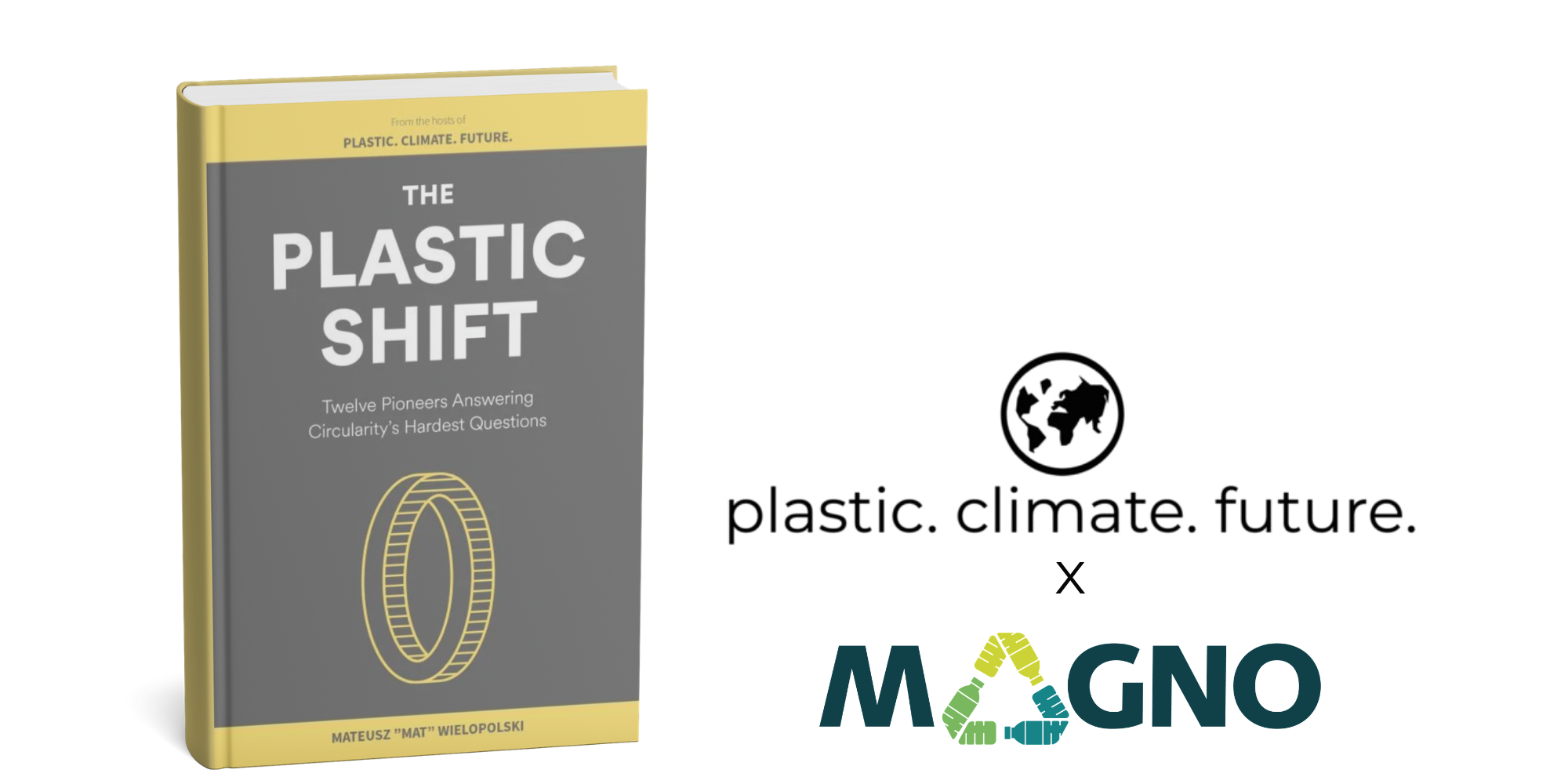
MAGNO was also featured in The Plastic Shift, a book published by the Plastic. Climate. Future. initiative.
One of the book’s chapters is dedicated to MAGNO and is based on a previous podcast conversation featuring Valeria Masci (EuPC) and MAGNO Project Coordinator Ignacio Fernández-Pacheco Ruiz.
The discussion explores how the MAGNO Ecosystem Digital Twin can help stakeholders test packaging solutions and circular strategies before implementing them in real-world settings, highlighting the importance of informed decision-making and consumer behaviour in achieving circularity.
This contribution helped bring MAGNO’s work to new audiences interested in plastics, climate action and sustainable packaging innovation.
Completion of the Consumer Awareness Campaign
During the first half of 2026, MAGNO successfully concluded its Consumer Awareness Campaign.
Over twelve months, the campaign explored a wide range of topics related to packaging, waste, reuse, circular systems, policy and consumer behaviour. Through articles, educational materials and online resources, the campaign sought to make complex sustainability topics more accessible to citizens and communities.
All campaign materials remain available through the MAGNO website, providing a lasting resource for consumers, schools, organisations and community groups interested in sustainable food packaging and circular economy topics.