
New Scientific Publication: “Impact of environmental microplastic exposure on HepG2 cells: unraveling proliferation, mitochondrial dynamics and autophagy activation”
MAGNO partner Mohamed Banni has contributed to a new scientific publication investigating the effects of environmental microplastics on human cells.
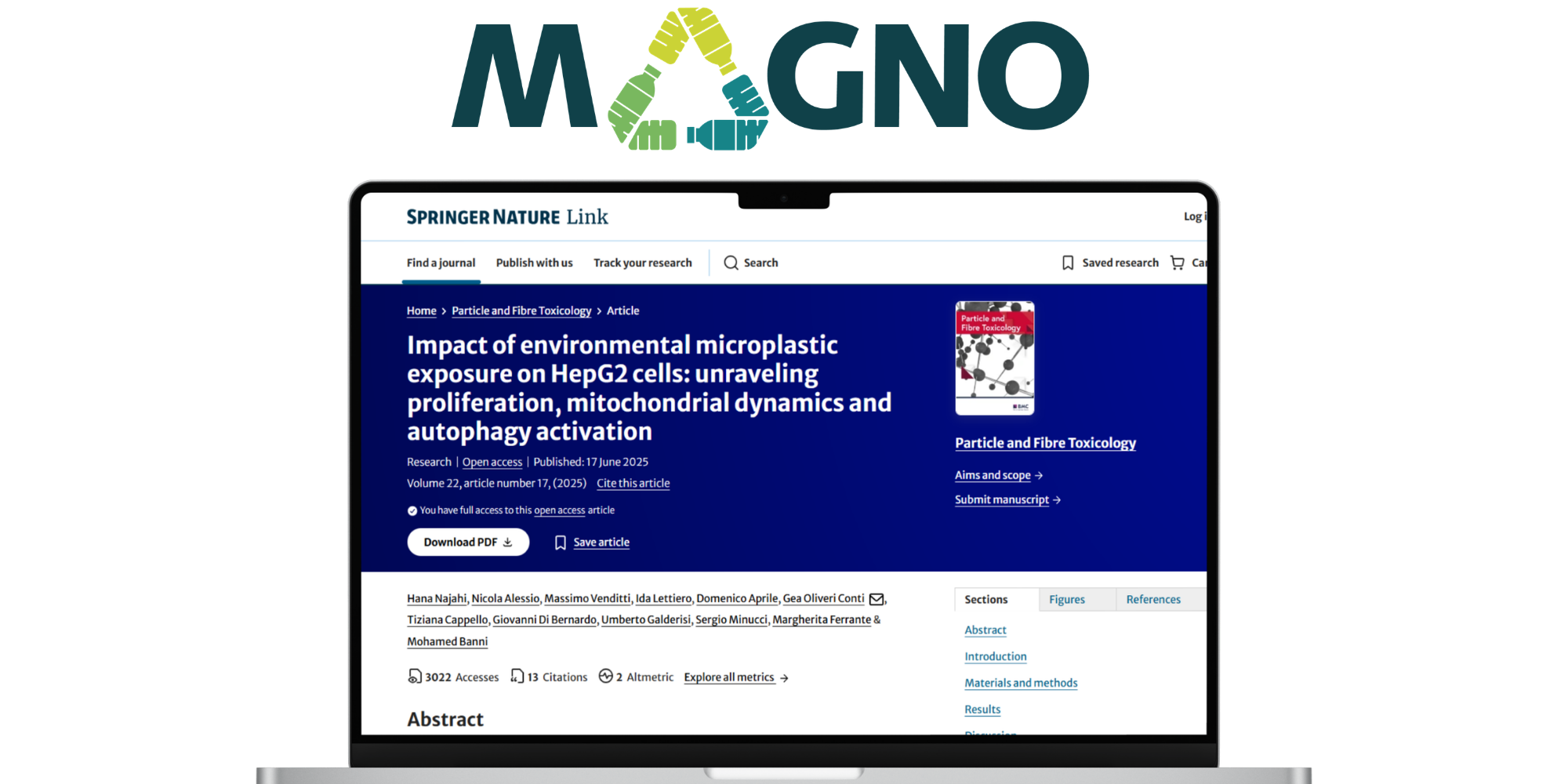
The study, titled “Impact of environmental microplastic exposure on HepG2 cells: unraveling proliferation, mitochondrial dynamics and autophagy activation”, focuses on how exposure to two common types of microplastics, polyethylene (PE) and polyethylene terephthalate (PET), affects human liver cells (HepG2). Given the central role of the liver in detoxification and metabolism, understanding how these materials interact with liver cells is key to assessing potential risks to human health.
In this study, HepG2 cells were exposed to PE and PET microplastics for 72 hours at a concentration of 10 µg/mL. The researchers examined several cellular parameters, including cell viability, oxidative stress, mitochondrial DNA integrity, mitochondrial membrane potential and autophagy.
The results revealed that microplastic exposure led to an increase in cell viability, together with higher levels of reactive oxygen species (ROS), indicating increased oxidative stress. At the same time, significant alterations in mitochondrial function were observed, including reduced mitochondrial DNA integrity and changes in membrane potential. In addition, the study identified the activation of autophagic processes, supported by increased levels of specific markers (LC3 and p62), which was further confirmed using baflomycin, a compound that blocks autophagic degradation.
Given the growing evidence of microplastic contamination in the environment and its presence in the food chain, these findings provide important insights into how such exposure may affect cellular processes and should be carefully considered in future research.