
Sorting the Truth: How EU Waste Management Systems Shape What We Throw Away
The way a society handles its waste says more about it than most official reports ever will. In Europe, waste management is framed as a civic duty—recycle, separate, compost, repeat lifting responsabilities for producers. This could be seen as an ideological bias. Anyway, beneath the neatly colored bins and national campaigns lies a patchwork of wildly different systems, ambitions, and results. Mapping the EU’s national waste management frameworks reveals a truth that should interest every consumer: where you live, the income you have or in fact government ideology determines whether your waste becomes a resource or a liability.
Waste Management in the EU: United in Law, Divided in Practice
At the European level, there is no shortage of directives, strategies, and targets. The EU Waste Framework Directive (WFD) sets the tone with a clear theoretical hierarchy: prevention first, then reuse, recycling, recovery, and—lastly—disposal. It aims to move member states toward a circular economy, where waste is not an afterthought but a raw material.
But the reality across the 27 member states varies drastically:
🟢 Leading Performers
These countries combine high recycling rates with strong policy frameworks and infrastructure:
- Germany: The EU’s poster child for waste management, with a dual system separating packaging (via the Green Dot scheme) and general waste. Over 65% of municipal waste is recycled, though critics argue the actual reuse rate is lower.
- Austria: Known for its high organic waste recovery and strict landfill bans. Landfilling of untreated waste is prohibited, pushing investment in recycling and incineration.
- Slovenia: A surprise leader, particularly Ljubljana—the first EU capital to adopt a zero-waste strategy. Slovenia’s recycling rate is above 58%, achieved through door-to-door collection and extensive citizen education.
- The Netherlands: Combines recycling with efficient waste-to-energy incineration. The country aims for a fully circular economy by 2050, but critics point out that incineration still dominates.
- Belgium: Particularly Flanders, which has one of the highest waste diversion rates in Europe. Separate collection of organics, packaging, textiles, and hazardous waste is widely implemented.
🟡 Mixed Performance
These countries show regional disparities or rely heavily on certain waste streams (like incineration or exports):
- France: Strong policy intent, including extended producer responsibility (EPR) and recent anti-waste laws banning plastic packaging for many fruits. However, recycling performance lags behind top-tier countries, and incineration remains common.
- Spain: Rapidly improving, especially in Catalonia and the Basque Country. National performance is uneven, and landfill use is still high. Recent law reforms aim to improve separate collection of organics and packaging.
- Italy: A tale of two countries—northern regions (e.g., Trentino, Emilia-Romagna) excel in waste separation and composting, while parts of the south struggle with illegal dumping and limited infrastructure.
- Portugal: Landfill use is declining, and recycling is growing thanks to EU-funded programs. However, rates remain below the EU average and awareness campaigns have had limited reach.
- Czech Republic: Strong uptake in separate collection, but recycling rates have plateaued. The country is introducing measures to reduce landfill and introduce EPR schemes.
🔴 Lagging Behind
These countries are struggling to meet EU waste targets and face structural, economic, or enforcement challenges:
- Greece: Still heavily reliant on landfill (over 70% of municipal waste), with limited access to recycling services outside urban centers. EU infringement procedures have pressured reforms, but progress is slow.
- Romania: One of the lowest performers in the EU. Despite EU funding, landfill is still the dominant method of disposal, and recycling infrastructure is underdeveloped.
- Bulgaria: Similar to Romania—high landfill dependence, low recycling rates (around 30%), and limited public engagement. Regional development programs aim to build capacity.
- Croatia: Landfill rates remain above 70%, and separate collection systems are unevenly implemented. EU funding has helped some cities improve, but rural areas lag behind.
- Malta: As an island state, faces unique logistical challenges. While recent years have seen investment in new waste treatment facilities, waste generation per capita remains high and recycling low.
The disparity is not only geographic—it’s systemic. Wealthier countries invest in education, modern facilities, and data transparency. Others rely on EU deadlines and external pressure to modernize. Consumers living in different corners of Europe are thus asked to play their part in systems that are not equally capable of delivering results.
Global Lessons: Models to Watch (and Avoid)
Europe doesn’t operate in a vacuum. Looking globally, we see two dominant models:
- The Scandinavian Approach: Countries like Sweden and Denmark have nearly eliminated landfill use through high recycling, waste-to-energy incineration, and public buy-in. These models show what’s possible when policy, infrastructure, and civic trust align.
- The Export Model: For years, much of Europe (and the U.S.) exported waste—particularly plastic—to countries like China, Malaysia, and Turkey. With China’s 2018 ban on foreign plastic waste, this model has collapsed, revealing the fragility of global recycling chains and the moral failure of outsourcing environmental harm.
In both contexts, one thing is clear: citizens cannot carry the burden alone. Even the most conscientious consumer cannot compensate for poor sorting infrastructure, unclear labeling, or lack of access to repair and reuse networks.
What This Means for You: The Empowered (and Frustrated) Consumer
Most EU residents have been told what goes in which bin. But few are told where it really goes next—or whether it will ever be recycled at all. This opacity breeds both confusion and cynicism.
So what can consumers do beyond obedient sorting?
- Demand transparency. Ask your municipality or waste collector: what actually gets recycled? What percentage goes to landfill or incineration?
- Support waste reduction policies—from banning unnecessary packaging to creating local repair and reuse centers.
- Push for standardization. Why should bin colors, labels, and sorting rules differ so drastically across borders—or even neighboring cities? A harmonized EU labeling system is long overdue.
- Make noise about the data gap. Much of the EU’s waste data is based on estimates or self-reported figures. Push for real tracking—from your bin to its final destination.
- Look upstream. Advocate for policies that reduce waste before it’s even created. The best waste is the one that never exists.
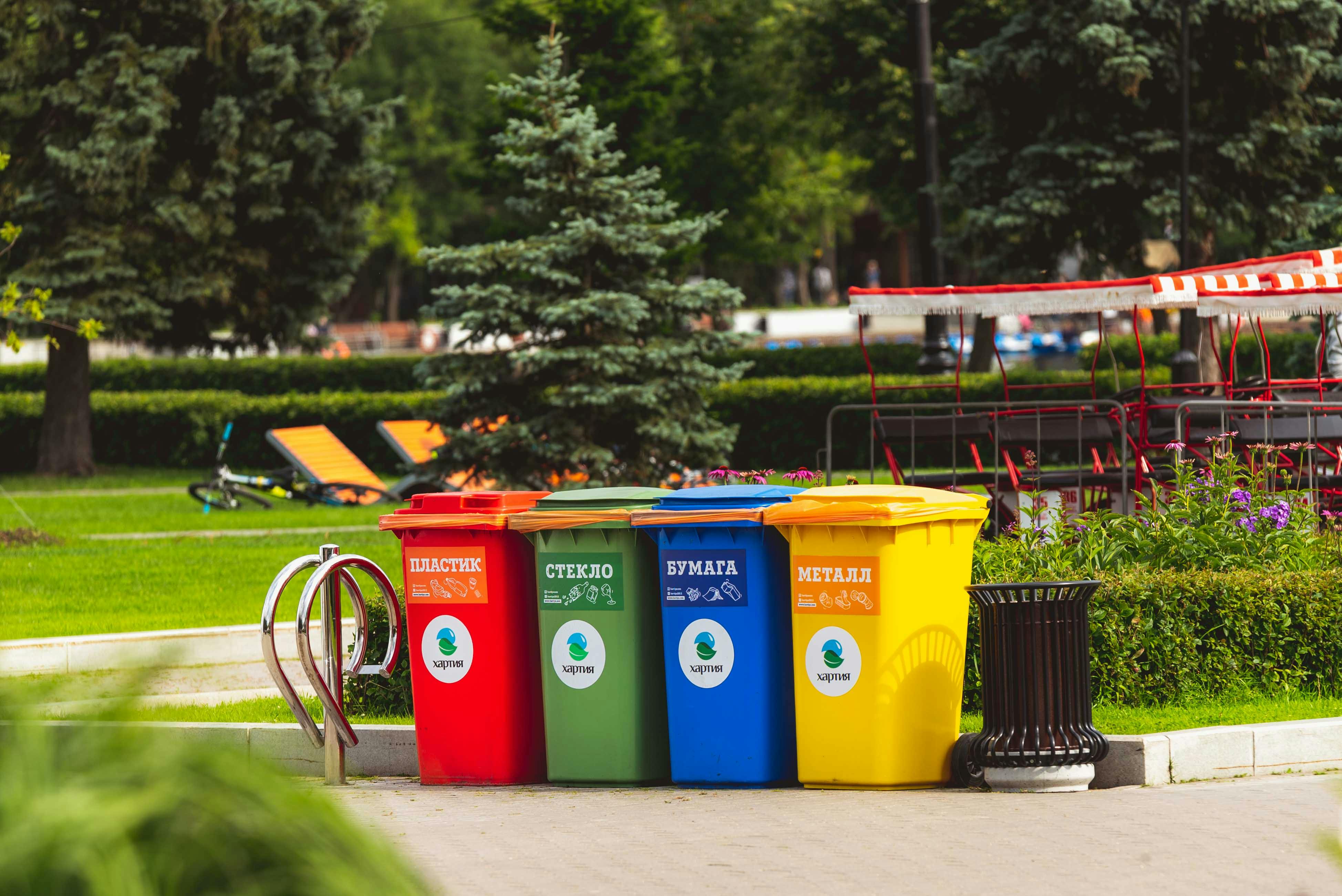
Photo by Vlad Vasnetsov (Pexels), licensed under CC0
It’s Not Just About Sorting—It’s About Systems
Mapping waste management in the EU reveals more than a list of policies; it shows a fragmented landscape where consumer responsibility is emphasized, but systemic accountability often lags behind leaving unresponsible companies still being unresposible. Yes, recycling matters. Yes, your choices make a difference. But they are only as effective as the system that receives them.
A Europe that truly respects its waste—and its citizens—needs to invest not just in better facilities, but in clearer communication, fairer frameworks, and policy consistency. Because until then, too much of what we “recycle” remains a well-meaning illusion.
Let’s stop just sorting—and start demanding a system that does more than shuffle the problem around.