
How Recycling Works: sustainable processes from collection, sorting, and recycling
Written by: Luigi Operato and Jessica Genovese
Recycling a soda can or a plastic bottle might seem simple: you toss it in a bin and forget about it. But behind the scenes, there is a journey that turns your used food packaging into something new. It starts from the moment you dispose of it (collection), through sorting, to the mechanical or chemical recycling processes that give materials a second life. Disposed packaging is transformed into materials with new shapes, colour, and even applications. Soda cans become the wings of an airplane, a plastic toy a component for the roof of a building. All this can only be done under specific technical conditions, taking into account regulatory, economic and infrastructural constraints.
However, the packaging journey begins with our choices, and it is so important that we are aware of the impact we have every day with small actions, such as throwing a soda can in the bin. This article will address this journey, and let you know more about what you can do to make a difference.
Why recycling (plastic) packaging matters
In 2022, approximately 55.2 million tonnes of plastics were used across the EU-27, Norway, Switzerland, and the UK, of which 18.5 million tonnes were used for packaging [1]. These plastics are typically used only once before being discarded, with the food and beverage sector being one of the main users of single-use packaging [2]. In general, plastic waste – including that from packaging – persists and accumulates in the environment, especially in marine ecosystems, where it harms the wildlife and leads to long-term ecological damage. Moreover, recent studies highlight the harmful effects of micro- and nano-plastics on human health [3]. That’s why recycling this waste is essential for reducing environmental harm, conserving resources, and moving toward a circular economy. The EU currently recycles roughly 41% of its plastic packaging waste [4].
To be properly recycled, packaging must go through a multi-stage process. At the beginning of this journey, all different packaging materials (paper, plastics, metal, and glass) undergo common operations, but the process becomes more material-specific as it progresses.
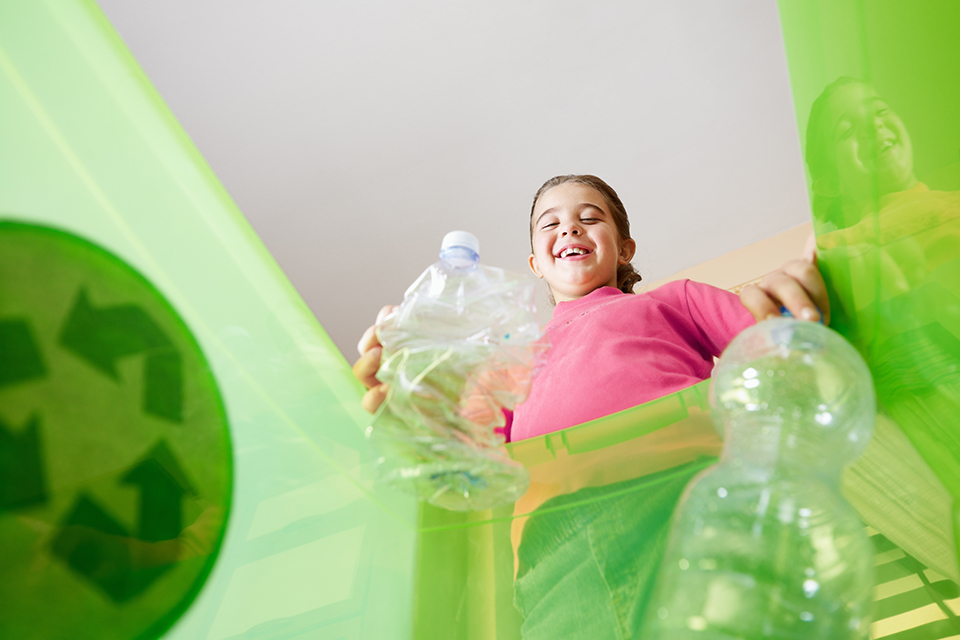
Photo by International Bottled Water Association, licensed under CC BY-NC 4.0
From your bin to the recycling center: collection
It all starts with you. When you place your empty soda can or yogurt cup into the recycling bin, you’re kicking off the first step: collection. Many communities, households and businesses separate recyclables (plastics, metals, paper, and glass) into designated bins. In other cases, everything goes into one bin through a single-stream collection system, where all waste is mixed together. This latter approach poses more challenges in the subsequent stages of the packaging journey, when materials need to be separated and directed to recycling processes. In both systems, collection trucks pick up the materials and transport them to a material recovery facility or recycling center, where the real transformation begins.
First management of different waste streams: sorting
At the material recovery facility, the real work begins. Piles of recyclables are unloaded for pre-sorting. Workers might pull out obvious contaminants from waste streams, like garbage or things that don’t belong. Rotating screens are generally employed in pre-sorting to segregate materials by size. These machines are applicable to nearly all kinds of waste. Other machines and technologies take over to segregate the materials by type, for instance:
- Density separators blow light materials (like plastic films) into one bin while heavier items (like glass) drop out.
- Magnets pull out ferrous metals (steel cans, tin).
- Eddy current separators use electromagnetic induction to direct non-ferrous metals like aluminum into a separate stream (How the Eddy Current Separator Works: High-Speed Metal Separation!)
Through these, the mixed recyclables are sorted into big waste categories (paper, plastics, metal, glass). If the waste streams entering the material recovery facility have already been separated at households (by you!) and business facilities, this process is much simpler and more efficient, as advanced sorting can directly follow. For example, advanced optical sorters like high-speed cameras with infrared sensors scan pre-sorted plastics to identify different polymer types, and use puffs of air to divert them accordingly.
Eventually, sorted waste streams are divided into neat bales or piles: bales of PET plastic bottles, bales of paper, piles of metal cans, etc. The cleaner and more uniform these streams, the more effectively they can be recycled afterwards.
So, why is sorting so important? Recycling processes require relatively pure inputs. A plastic reprocessor wants mostly one type of plastic in a batch; a paper mill wants paper fibers, not shards of glass. The better the sorting, the higher the quality of recycled materials.
Mechanical vs. chemical recycling: two paths to new life
Once the paper, glass, metal, and plastics are sorted, they head off to be recycled into new materials. For materials like metal, glass, and paper, this is usually straightforward, as they undergo mechanical recycling, which involves physical processes (melting, pulping, etc.) to reform them. Plastics, however, can follow two main recycling paths: mechanical recycling or chemical recycling.
What’s the difference? Table 1 shows the main difference for these two recycling paths.
| Aspect | Mechanical Recycling | Chemical Recycling |
| Process | Physically cleans, grinds, and remelts materials into new form without altering their basic chemical structure. | Uses chemical reactions to break materials down to molecular building blocks (monomers or oils) which can be reprocessed. |
| Inputs needed | Requires clean, sorted, single-type plastics for best results (e.g. a batch of mostly PET or HDPE). Contaminants and mixed plastics are problematic.
|
Can handle plastics that mechanical methods can’t (e.g. multi-layer film), including low-quality inputs. |
| Output quality | Produces plastic that may be of slightly lower quality; polymers can degrade each cycle. Some high-purity mechanical recycling can yield food-grade material (e.g. PET bottles) but not always. | Produces “virgin-like” quality outputs – i.e., as pure as new material. This can be re-made into plastics suitable for sensitive uses (food contact, etc.). |
| Energy & Cost | Generally low energy use and cost-effective for straightforward streams. It’s been the standard method for decades. However, not all plastics can be recycled this way (e.g. multi-layer packaging). | More energy-intensive and expensive. Requires high heat or chemicals (e.g. pyrolysis at 500°C+). Still emerging technology, currently smaller scale than mechanical. |
Both methods aim to keep materials in use and out of landfills, but they work in very different ways. Mechanical recycling is what we traditionally think of: old products are physically processed into new forms. For example, paper is water-pulped and rolled into new paper, glass is melted and re-cast, plastics are shredded, melted, and re-extruded as pellets. This method is efficient and has a relatively low carbon footprint, but it requires high-quality input [2]. If plastics are dirty or mixed together, mechanical recycling struggles. Also, each recycling process can degrade plastics materials, meaning they can’t be endlessly recycled without some loss of performance. Mechanical recycling is focused on the three dominant packaging polymers: PE, PP, and PET [2].
Chemical recycling steps in as a complement to deal with the plastics that are not easily mechanically recycled. There are various technologies to do that, and the big advantage of chemical recycling is the ability to deal with complexity. Things like multi-layer pouches might be salvaged by chemical means. However, chemical recycling is more resource intensive. It often uses a lot of energy (for high temperatures used) and can be costly. In recent years, chemical recycling has gained momentum, drawing increasing attention from both researchers and industry leaders. Despite its potential, in 2022, chemical recycling accounted for just 0.1% of Europe’s total plastics production [2]. The reasons for this include high costs, limited infrastructures, and regulatory frameworks that are not yet as well-established as those supporting mechanical recycling. For example, it is still unclear whether chemically recycled plastics should be classified as entirely new materials or labeled as “recycled” by default, and under which processing methods. While this may seem like a simple distinction, it has significant implications for manufacturers aiming to comply with regulations such as the Packaging and Packaging Waste Regulation, which demands a minimum recycled content for packaging products. This issue is especially critical in food and beverage packaging, where chemical recycling offers superior contamination control with respect to mechanical recycling [5]. That said, chemical recycling capacity is foreseen to grow substantially in the next future [6].
Mechanical and chemical recycling should not be seen as competitors, but as complementary parts of a recycling ecosystem. Mechanical recycling should remain the priority whenever possible (it’s usually cheaper and has lower emissions), while chemical recycling can be used for the fraction of plastics that mechanical methods can’t handle.
Closing the loop: from waste to new products
After recyclable materials are reprocessed, they are ready to re-enter the market as raw materials for new products. This is where the loop closes: yesterday’s waste becomes tomorrow’s packaging (or other goods). Table 2 provides an overview of recyclability features, resource use, recycling rates in EU and challenges for different materials used in the packaging sector.
| Material | Recyclability & quality | Energy/resource benefits | Recycling rate (EU) | Key challenges / notes |
| Aluminum | Aluminum is infinitely recyclable with virtually no loss of quality
|
Huge energy savings: Recycling aluminum uses ~5% of the energy of making new metal (∼95% energy saved) [7], saving bauxite ore. | Aluminum cans recycling rates are around ~76% in the EU [8]. | – High scrap value makes metals worth recycling. – Fast turnaround: a recycled aluminum can returns to shelf in ~60 days. – Easy to separate |
| Glass | Infinitely recyclable with no purity loss. Glass can be remelted indefinitely into new bottles/jars. | Energy savings: Recycled glass (cullet) melts at a lower temperature than virgin materials, saving energy and CO₂ emissions. | ~76% of glass packaging is recycled in the EU [2]. | – Color sorting needed: glass must be sorted by color (clear, green, brown) for optimal recycling. |
| Paper & cardboard | Recyclable 5-7 times before fiber quality degrades. Adding some fresh pulp can extend total cycles. | Conserves resources: every ton of recycled paper saves ~17 trees and 50% less water vs making new paper [9]. Also saves energy (making recycled paper uses ~60% less energy). | ~83% of paper/cardboard packaging is recycled in the EU [2]. | – Keep dry & clean: paper soiled with food/oil (e.g. greasy pizza boxes) may not be recyclable. – Well-established markets: high demand for recycled cardboard by industry. |
| Plastics | Varies by type: PET (#1) and HDPE (#2) can be mechanically recycled a few times, but quality drops each cycle.
Emerging: chemical recycling could allow plastics to be recycled back into monomers to retain quality. |
Moderate savings: Recycling plastic saves petroleum and energy compared to new plastic, but efficiency is lower than metals and glass. | ~40% of plastic packaging waste is recycled in the EU [2]. Global plastic recycling is much lower (~9% of all plastic waste ever recycled). | – Many polymer types; must be sorted (e.g. PP, PS, PVC often not accepted in all programs). – Contamination: food residue and mixing of plastic types can ruin batches. – Innovation needed: improving packaging design for recyclability and scaling up chemical recycling to handle mixed or dirty plastics. |
To ensure transparency and build trust in the use of recycled content, numerous certifications and standards have been developed. These help verify the origin, quality, and traceability of recycled materials. Examples include:
- RecyClass, a European certification scheme assessing recyclability and traceability of plastic packaging.
- EuCertPlast, which focuses on the traceability of plastic materials in the recycling process and the quality of recycled content.
- The Forest Stewardship Council recycled label, widely recognized in the packaging industry, particularly for paper-based materials. It certifies that a product is made from 100% recycled materials.
Do your part: 7 tips to recycle like a PRO
Recycling is a team effort. Manufacturers and waste companies handle the heavy processing, but what we do as consumers at home is critical to make the system work. Here are some tips and tricks to ensure you are doing your part effectively:
- Know your local rules: recycling programs differ by city and country. Check your local recycling guidelines (usually provided by the municipal waste authority or on their website). They’ll tell you which materials are accepted, and which are not. Knowing the specifics ensures you aren’t inadvertently putting non-recyclables in the designated bin.
- Empty and rinse containers: one of the biggest problems in recycling is contamination. Food or liquid left in containers can soil paper and make it unrecyclable. Remember to always empty your containers (no significant food or drink remaining). Give jars, bottles, and cans a quick rinse to remove residual sauce, soap, etc. They don’t need to be spotless, just reasonably clean.
- Caps On or Off? This is a common question: for plastic bottles, should you leave the cap on? The guidance has changed over time. Currently, many programs ask you to squash the bottle and put the cap back on before recycling. This keeps the cap with the bottle (small loose caps can fall through sorters) and saves space. However, some areas prefer caps off. Check local advice.
- Break down cardboard boxes and keep them dry: flattening boxes saves space in your bin and on the collection truck and makes them easier to process. It also ensures no food or trash is hiding inside them. Moreover, try to keep your paper and cardboard dry: is hard to recycle when wet because the fibers degrade.
- Don’t “Wishcycle”: wishcycling is when you throw something in the recycle bin hoping it’s recyclable, even though you’re not sure (e.g. that random plastic toy, or a juice pouch). It often does more harm than good. When in doubt, leave it out (or find a special recycling program for it). It’s better to send one recyclable item to landfill than to contaminate an entire batch of recyclables and cause the whole lot to be landfilled.
- Don’t throw hazardous materials in curbside: batteries, electronics, light bulbs, paint, pesticides, medical waste: all these need special handling. Putting them in household recycling (or trash) is dangerous (batteries can cause fires in trucks and plants). Use proper e-waste and hazardous waste drop-off programs for these.
- Reduce and Reuse where possible: remember that recycling is third in the hierarchy: reduce, reuse, recycle. Reducing the amount of packaging you consume and reusing containers will have an even bigger impact than recycling. Choose products with less packaging or packaging that’s easily recyclable. Use a refillable water bottle instead of buying disposable ones, etc. This way, there’s less waste to deal with.
By following these tips, you help ensure that what goes into your bin comes out the other end as a useful material. Importantly, don’t be discouraged by reports that “it all just ends up in landfill.” Successful recycling is happening all over the world. For example, Sweden recycles or energy-recovers over 99% of its household waste [10], and the EU as a whole recycles about 65% of packaging waste [2].
We as consumers are part of this success. Small habits, scaled up, change the world.
References
[1] Total plastics consumption by end-users in the EU27+3 | Circularity Metrics Lab
[2] Frontiers | Food packaging use and post-consumer plastic waste management: a comprehensive review
[4] 41% of plastic packaging waste recycled in 2022 – News articles – Eurostat
[6] Chemical recycling of plastics_0.pdf
[7] euric_metal_recycling_factsheet.pdf
[8] EA-MPE_BevCan-2021-Recycling-Results_Press-Release_23-February-2024final.pdf
[9] Paper Recycling — Western Resources Group
[10] https://www.eea.europa.eu/publications/many-eu-member-states/sweden