
How Consumers Can Get Involved in School or
Community Efforts: Building Local Connections
for Action
Big shifts toward sustainability don’t always start in Brussels boardrooms or corporate headquarters. Very often, they begin much
closer to home—in our schools, neighbourhoods, and community centres, which is much affordable even. Local initiatives are where ideas take root, habits form, and young people learn by example. When consumers engage with these community-level projects, they don’t just reduce waste or cut emissions—they help build a culture of responsibility that grows stronger with each generation.
Why Local Matters
Schools and community organisations are trusted spaces. They shape values, provide education, and create opportunities for collaboration. When sustainability is introduced here, it becomes more than a checklist—it becomes part of everyday life. A child who reuses a lunch container at school, or a neighbour who joins a community repair café, isn’t just making a personal choice. They’re participating in a shared experiment in living differently, and this work not only for food packaging but for the rest of their lives.
A Step-by-Step Tool for Schools and Communities
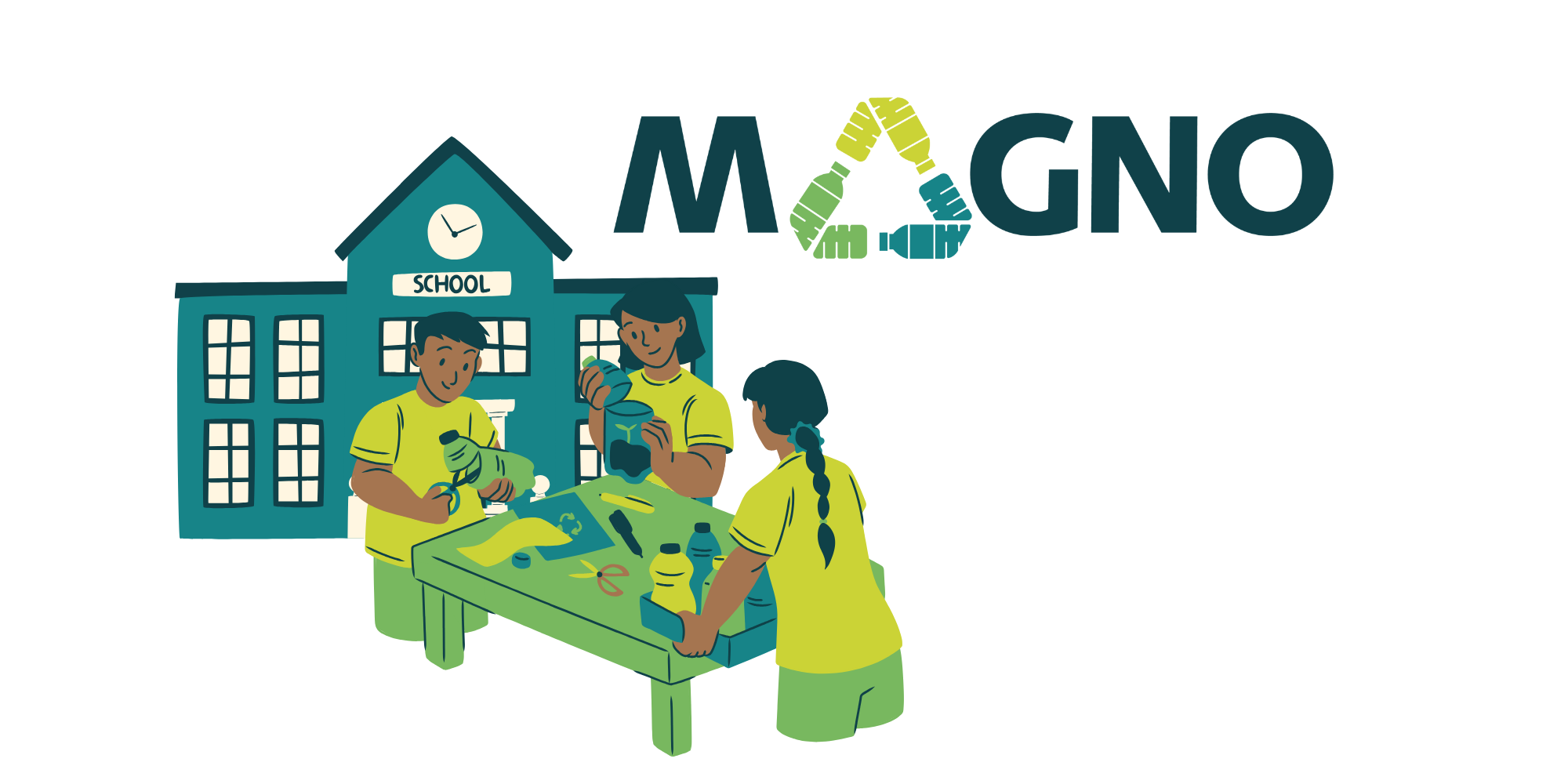
Here’s a simple roadmap any school or community group can adapt:
- Start Small and Visible
Begin with a practical, easy-to-see action, like introducing reusable cups at a school event or setting up a recycling station at a community fair. Visibility builds trust and curiosity. - Engage Stakeholders Early
Bring in parents, teachers, local businesses, and municipal representatives. The earlier people feel involved, the stronger the sense of shared ownership. - Measure and Celebrate
Track progress—how many single-use items avoided, how many kilos of waste reduced—and share the results widely. Numbers make achievements tangible. - Scale Up
Once the first initiative is embedded, add new layers: composting in cafeterias, repair cafés for broken electronics, or shared gardens.
Build step by step, rather than trying to do everything at once. - Connect to Bigger Networks
Link with regional projects, EU-funded initiatives, or collaborations like MAGNO. These connections provide technical support, legitimacy, and the chance to learn from others.

Photo from Heal the Bay (Flickr), licensed under CC BY-NC-SA 2.0
A Story from Europe: The School That Went Plastic-Free
In 2019, a primary school decided to reduce the amount of single-use plastic waste generated by its students’ lunches. Teachers noticed bins filling daily with disposable wrappers and bottles. Instead of launching a massive campaign, they started small: one “plastic-free Friday” a month.
Parents were encouraged to send children with reusable bottles and snack boxes, while the school canteen stopped offering food in disposable containers. Students measured the amount of plastic avoided each week and made posters showing their progress. Within six months, enthusiasm grew, and plastic-free days became a full-time practice.
Local businesses joined in, offering discounts on refillable products for families. The municipality provided extra bins and educational workshops. Soon, the school became a reference point for others in the region. What started with a single Friday turned into a community-wide cultural shift.

Photo from The Central Trend, licensed under CC0 1.0
The Role of Policy and Collaboration
Individual actions matter most when they are embedded in larger systems. The EU’s Circular Economy Action Plan and the forthcoming
Packaging and Packaging Waste Regulation (PPWR) provide a framework for waste reduction, but they need community pilots to make policy real.
Projects like MAGNO play a vital role here. By piloting reusable packaging systems in collaboration with businesses, schools, and communities, MAGNO creates scalable models that others can adopt. A school partnering with MAGNO, for example, could test reusable lunchbox systems supported by logistics and cleaning infrastructure—showing parents and policymakers that these models are practical and replicable.
Building Habits, Building Futures
Getting involved in school or community efforts isn’t about grand gestures—it’s about building connections that last. A reusable lunchbox may look small, but it sparks conversations, sets examples, and builds the habits that make systemic change possible.
And when those local actions connect to EU policies and collaborative projects like MAGNO, the impact multiplies. Together, schools, communities,and citizens can help Europe move from sustainability talk to sustainability practice—step by step, story by story.